
Duane Sharrock Discusses Igniting the Engine of Intent on Radio Kingston
I recently had the pleasure of joining Natalia on Radio Kingston to discuss my new book, Igniting the Engine of Intent, and the work I do helping individuals and organizations unlock their full potential through the power of the conative mind. During our conversation, we explored leadership, mental health, intentional action, and how understanding our natural…

The Readiness Age
Working subtitle: From Knowing to Being Ready: A New Code for Schools, Work, and Life in the Age of AI By Duane Sharrock Author’s Note I have watched capable people freeze. Bright students who could pass any test but could not start a hard paper. Skilled professionals who knew the right answer in their bones…
The Quartite Architecture of Mind
The Quartite Architecture of Mind .chart-container { position: relative; width: 100%; max-width: 800px; margin-left: auto; margin-right: auto; height: 50vh; max-height: 500px; } @media (min-width: 768px) { .chart-container { height: 60vh; max-height: 600px; } } .flow-card { transition: transform 0.2s; } .flow-card:hover { transform: translateY(-5px); } MRRT Matrix Explorer The Quartite Architecture of Mind Mapping the…
The Four Powers Inside You: Why Energy Isn’t Just Physical
By Duane Sharrock
There’s a moment that catches most people off guard when we start talking about what it takes to actually change—to move from knowing something intellectually to living it differently. Someone will say something like, “I understand what I need to do, but I just can’t seem to make myself do it.” Or: “I know my values, but I keep making decisions that contradict them.”
When I hear these expressions—and I’ve heard them thousands of times working with students, educators, and professionals—I recognize something crucial happening.
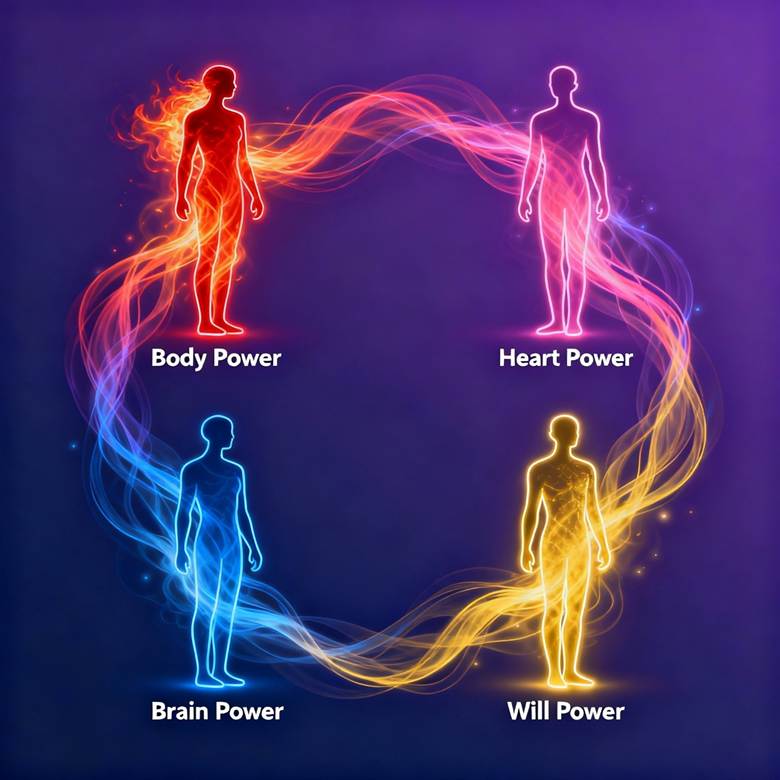
The person isn’t confused about one thing. They’re experiencing friction across four different kinds of energy working inside them.
For years, we’ve talked about human energy in limited ways. We talk about physical energy—how sleep, exercise, and nutrition affect our capacity to function. That’s important and real. But the picture is woefully incomplete.
The truth is more interesting and far more empowering: you have four distinct kinds of energy flowing through you at all times, and understanding each one is the foundation for extraordinary performance and authentic transformation.

1. Body Power: The Smartest Learning Tool You’re Probably Ignoring
Let me start with the most underestimated source of energy: your body.
I remember a period in my own life when I was in genuinely good shape—strong, with real endurance. During that time, my body was practically humming with energy. I needed less sleep, learned faster, and performed better across every domain. What struck me most was the clarity: I could think without the fog that normally accompanies fatigue or physical dysfunction.
When I was physically depleted—sedentary, stuck in chairs all day, disconnected from movement—everything was harder. Not just physically, but cognitively and emotionally too.
This isn’t coincidental. Your body is actually a learning tool—probably the smartest one you have. When you move, when you engage your senses, when you’re physically present in what you’re doing, your brain optimally functions under these multisensory conditions. Your body processes information through:
- Exteroception: Noticing what’s happening around you through your senses.
- Interoception: Feeling what’s happening inside your body—the signals telling you what you need.
- Proprioception: Understanding where your body is in space and how to move effectively.
The practical truth: if you’re neglecting your body, you’re creating a massive barrier to learning, thinking, and doing. It’s not an afterthought to your mental performance. It’s foundational.
2. Heart Power: Your Emotions as Intelligent Guidance
Now let’s talk about what might be the most misunderstood kind of energy: emotional energy, or what I call Heart Power.
For decades, we’ve treated emotions and logic as opponents. The thinking goes: emotions are obstacles to clear reasoning. If we could just think our way through life without the complication of feelings, we’d be better off.
Here’s what I’ve learned from watching how actual humans live: that distinction is false.
Your emotions are not obstacles. They’re sophisticated information systems guiding you toward what matters. Heart Power encompasses the full spectrum of emotional intelligence:
- Empathy, compassion, and connection.
- Emotional literacy (naming what you feel).
- Motivation derived from personal meaning.
Here’s where this gets practical: you can be motivated by external rewards—the promotion, the money, the achievement. That works for a while. But sustainable motivation, the kind that carries you through setback and uncertainty, comes from alignment with your values. It comes from Heart Power.
3. Brain Power: The Thinking Analyzer (and Its Limitations)
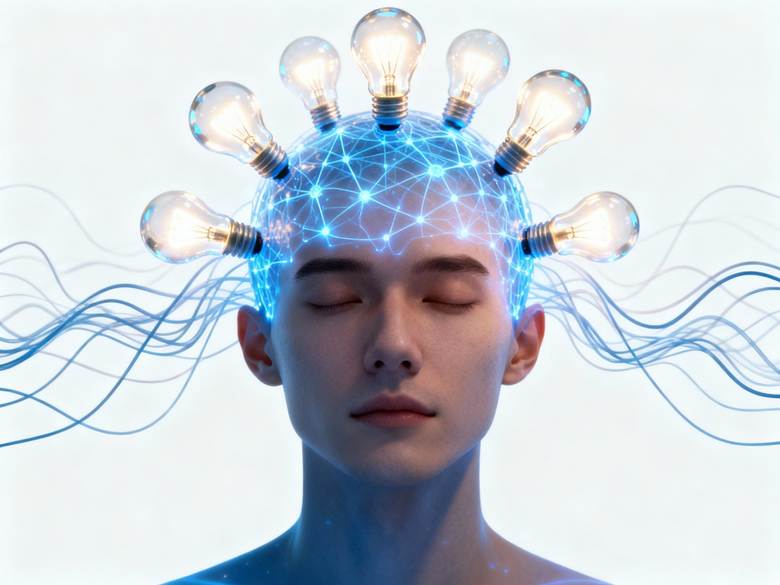
This is the energy type people generally understand best. Brain Power is your cognitive capacity—reason, logic, analysis, memory, language, and abstract thought.
Your Brain Power enables you to:
- Understand complex information.
- Remember and retrieve what you’ve learned.
- Plan and sequence actions.
- Inhibit impulses that don’t serve you.
- Maintain attention and focus.
- Solve problems creatively.
It is essential. And it is profoundly insufficient on its own.
I’ve watched brilliant people—genuinely intelligent people—become paralyzed by analysis. They think about every possible angle, every contingency, every potential problem. But they never move. This is what I call “analysis paralysis,” and it’s one of the most common forms of fragmentation I see.
4. Will Power: The Engine of Intent
Here’s where most models of human functioning completely fall apart.
Will Power is the conative domain—the engine that translates thoughts and feelings into purposeful action. It’s volition, intention, and the fundamental drive to achieve goals. It’s what separates people who dream from people who actually do.
Most educational and psychological models skip over this: Why do you do things? What’s the mechanism that moves you from understanding and even wanting something to actually doing it consistently?

That gap—the gap between knowing what to do and actually doing it—is conative inertia. Will Power energy includes:
- Intention: The conscious direction of your effort toward something that matters.
- Goal-directed behavior: The capacity to stay focused on what you’re trying to achieve.
- Sustained commitment: The ability to persist when motivation wavers or obstacles appear.
- Volition: The actual will to act, rooted in purpose.
When Will Power is engaged, energy flows. Someone with strong Will Power doesn’t need to be pushed or convinced repeatedly.
The Dance: How These Four Powers Work Together
Here’s the insight that changed everything for me: these four kinds of energy are in constant dialogue with each other.
When all four are working together, you get an integrated system that enables extraordinary performance. But when they are disconnected, you experience capability gaps:
- Emotional Blindness: Cognitive thinking that ignores what you’re actually feeling. You make sense on paper but wreck real relationships or violate your own values.
- Sensory Deprivation: Thinking disconnected from physical reality. You become untethered from practical applicability and lived experience.
- Analysis Paralysis: Excessive analysis without conative engagement prevents decision-making. The thinking becomes an escape from doing.
Sustainable behavioral change requires integration across all four domains.
What This Means for You
Here’s my invitation: for the next week, pay attention to where you’re experiencing friction or stagnation in your life. Now ask yourself: which energies are engaged, and which ones are dormant?
- Is your body telling you something you’re not listening to? Are you exhausted or depleted?
- Is your heart truly aligned with what you’re pursuing? Or are you forcing yourself toward something your values don’t actually support?
- Is your brain clear and capable? Or are you trapped in circular thinking?
- Is your will engaged? Do you actually want this thing, or are you pursuing it because you think you should?
The most powerful transformations happen not when we add more willpower or think harder, but when we restore balance and integration across all four powers.
What’s your experience? Which of your four powers feel strong right now? Which ones are asking for attention? I’d love to hear what you discover when you start paying attention to the subtle dance of these energies in your own life.
Format 2: Microsoft Word / Manuscript Style
This style strips away web-specific elements and focuses on clean headers and paragraphs, suitable for a professional report or book chapter.
The Four Powers Inside You: Why Energy Isn’t Just Physical
There’s a moment that catches most people off guard when we start talking about what it takes to actually change—to move from knowing something intellectually to living it differently. Someone will say something like, “I understand what I need to do, but I just can’t seem to make myself do it.” Or: “I know my values, but I keep making decisions that contradict them.” Or: “I think I should do this, but I don’t feel like it.”
When I hear these expressions—and I’ve heard them thousands of times working with students, educators, and professionals—I recognize something crucial happening. The person isn’t confused about one thing. They’re experiencing friction across four different kinds of energy working inside them.
For years, we’ve talked about human energy in limited ways. We talk about physical energy—how sleep, exercise, and nutrition affect our capacity to function. That’s important and real. But the picture is woefully incomplete. The truth is more interesting and far more empowering: you have four distinct kinds of energy flowing through you at all times, and understanding each one is the foundation for extraordinary performance and authentic transformation.
Body Power: The Smartest Learning Tool You’re Probably Ignoring
Let me start with the most underestimated source of energy: your body.
I remember a period in my own life when I was in genuinely good shape—strong, with real endurance. During that time, my body was practically humming with energy. I needed less sleep, learned faster, and performed better across every domain. What struck me most was the clarity: I could think without the fog that normally accompanies fatigue or physical dysfunction.
When I was physically depleted—sedentary, stuck in chairs all day, disconnected from movement—everything was harder. Not just physically, but cognitively and emotionally too. This isn’t coincidental. Your body is actually a learning tool—probably the smartest one you have. When you move, when you engage your senses, when you’re physically present in what you’re doing, your brain optimally functions under these multisensory conditions. Your body processes information through:
- Exteroception: Noticing what’s happening around you through your senses.
- Interoception: Feeling what’s happening inside your body—the signals telling you what you need.
- Proprioception: Understanding where your body is in space and how to move effectively.
The practical truth: if you’re neglecting your body, you’re creating a massive barrier to learning, thinking, and doing. It’s not an afterthought to your mental performance. It’s foundational.
Heart Power: Your Emotions as Intelligent Guidance
Now let’s talk about what might be the most misunderstood kind of energy: emotional energy, or what I call Heart Power.
For decades, we’ve treated emotions and logic as opponents. The thinking goes: emotions are obstacles to clear reasoning. If we could just think our way through life without the complication of feelings, we’d be better off. We’d be more rational, more effective. Here’s what I’ve learned from watching how actual humans live: that distinction is false.
Your emotions are not obstacles. They’re sophisticated information systems guiding you toward what matters. When you feel drawn to something, that’s not weakness or irrationality—it’s deep knowing. When something feels wrong even though it looks right on paper, that feeling is telling you something important about misalignment with your values.
Heart Power encompasses the full spectrum of emotional intelligence: your capacity for empathy, compassion, and connection. It includes emotional literacy—the ability to name and understand what you’re actually feeling, not what you think you should feel. Most importantly, it includes motivation derived from personal meaning.
Here’s where this gets practical: you can be motivated by external rewards—the promotion, the money, the achievement. That works for a while. But sustainable motivation, the kind that carries you through setback and uncertainty, comes from alignment with your values. It comes from Heart Power.
Brain Power: The Thinking Analyzer (and Its Limitations)
This is the energy type people generally understand best, so I won’t belabor it. Brain Power is your cognitive capacity—reason, logic, analysis, memory, language, abstract thought. It’s the domain of the “thinking analyzer,” as I call it. Your Brain Power enables you to:
- Understand complex information
- Remember and retrieve what you’ve learned
- Plan and sequence actions
- Inhibit impulses that don’t serve you
- Maintain attention and focus
- Solve problems creatively
It’s essential. And it’s profoundly insufficient on its own.
I’ve watched brilliant people—genuinely intelligent people—become paralyzed by analysis. They think about every possible angle, every contingency, every potential problem. They’re excellent at the thinking part. But they never move. The brilliance of the analysis never translates into action. This is what I call “analysis paralysis,” and it’s one of the most common forms of fragmentation I see. Someone has Brain Power in abundance but is starved in Will Power—the capacity to actually do something with all that thinking.
Will Power: The Engine of Intent
Here’s where most models of human functioning completely fall apart, which is why I’ve spent fifteen years building frameworks that don’t ignore this crucial piece.
Will Power is the conative domain—the engine that translates thoughts and feelings into purposeful action. It’s volition, intention, and the fundamental drive to achieve goals. It’s what separates people who dream from people who actually do.
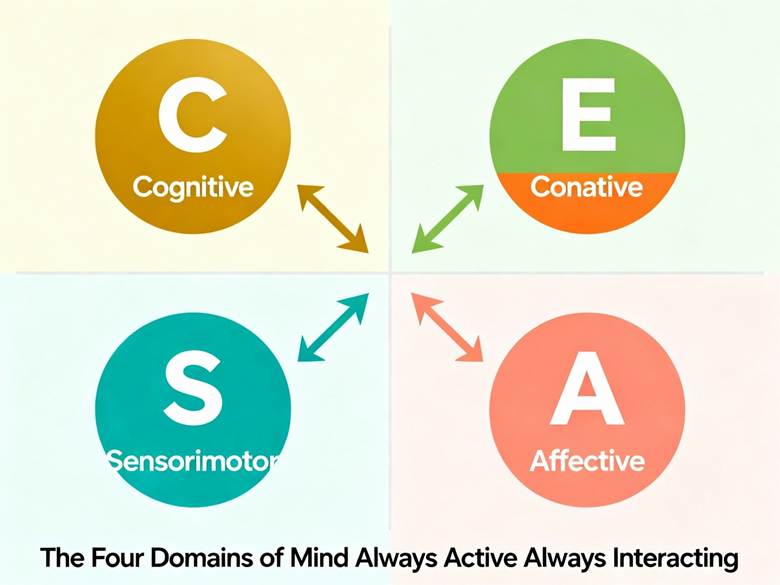
Most educational and psychological models don’t have a category for this. They talk about what you know (cognitive), what you feel (affective), and what you can do physically (sensorimotor). But they largely skip over this: Why do you do things? What’s the mechanism that moves you from understanding and even wanting something to actually doing it consistently?
That gap—the gap between knowing what to do and actually doing it—that’s conative inertia. And it’s probably the single biggest source of human frustration. Will Power energy includes:
- Intention: The conscious direction of your effort toward something that matters.
- Goal-directed behavior: The capacity to stay focused on what you’re trying to achieve.
- Sustained commitment: The ability to persist when motivation wavers or obstacles appear.
- Volition: The actual will to act, rooted in purpose.
When Will Power is engaged, energy flows. Someone with strong Will Power doesn’t need to be pushed or convinced repeatedly. They’ve clarified what matters, and they move toward it even when conditions aren’t perfect.
The Dance: How These Four Powers Work Together
Here’s the insight that changed everything for me: these four kinds of energy aren’t separate domains that operate independently. They’re in constant dialogue with each other, each one influencing and being influenced by the others.
When all four are working together, you get something I call an integrated system that enables extraordinary performance. Your body is engaged and sending clear signals. Your heart is aligned with what you’re doing—it matters to you. Your brain is sharp and solving problems. And your will is engaged—you know why you’re doing this, and you’re committed to seeing it through.
That’s a rare state. That’s when people do their best work, make their best decisions, and grow most effectively. But here’s what’s more common: someone has strength in one or two domains while others are starved or underdeveloped. The result is what I call capability gaps—friction points that undermine overall effectiveness.
- Emotional Blindness: Cognitive thinking that ignores what you’re actually feeling often leads to decisions with negative emotional consequences. You make sense on paper, but wreck real relationships or violate your own values.
- Sensory Deprivation: Thinking disconnected from physical reality lacks grounding. You become untethered from practical applicability and lived experience.
- Analysis Paralysis: Excessive analysis without conative engagement prevents decision-making and action. The thinking becomes an escape from doing.
Sustainable behavioral change requires integration across all four domains. Organizations that address only cognitive factors—knowledge and skills—without attending to affective factors (values and motivation), sensorimotor factors (embodied practices and environmental design), and conative factors (goal-setting and intentional action) consistently fail to achieve lasting transformation. The same is true for individuals.
What This Means for You
Here’s my invitation: for the next week, pay attention to where you’re experiencing friction or stagnation in your life. That job you know you should leave but can’t quite commit to. That relationship that needs attention. That creative project that excites you intellectually but never moves forward. Now ask yourself: which energies are engaged, and which ones are dormant?
- Is your body telling you something you’re not listening to? Are you exhausted or depleted? Are you disconnected from physical engagement with what matters?
- Is your heart truly aligned with what you’re pursuing? Or are you forcing yourself toward something your values don’t actually support?
- Is your brain clear and capable? Or are you trapped in circular thinking, overanalyzing because you’re afraid to move forward?
- Is your will engaged? Do you actually want this thing, or are you pursuing it because you think you should?
The most powerful transformations happen not when we add more willpower or think harder, but when we restore balance and integration across all four powers. That’s the real source of extraordinary energy: not grinding yourself harder with a single force, but orchestrating all four in concert.
What’s your experience? Which of your four powers feel strong right now? Which ones are asking for attention? I’d love to hear what you discover when you start paying attention to the subtle dance of these energies in your own life.